The Problem
One of the biggest barriers for developers today is the antiquated process by which new, large-scale energy projects connect to the transmission grid. After securing several important reforms to the generator interconnection process from the Federal Energy Regulatory Commission (FERC) in 2023, Advanced Energy United didn’t settle, launching a multi-year effort to make foundational changes at power markets across the country so our industry’s projects no longer need to flounder in delay and uncertainty.
The initial set of reforms FERC produced in 2023 wasn’t holistic enough in scope to tackle many of the problems with the way generator interconnection queues are managed. FERC Order No. 2023 requires grid operators to move away from the “first come, first served” model of grid connection to a “first ready, first served” cluster process, but the message from the industry was that this change in approach should be seen as the bare minimum of the reforms needed.
We are fighting to make it easier for solar, wind, and energy storage projects to move through interconnection queues and connect to the transmission grid in states across the country.
The Solution
When FERC issued Order No. 2023, requiring wholesale markets to implement some of the reforms that Advanced Energy United advocated for, it set in motion a two-part second phase to our advocacy work for interconnection queue reform: a) good implementation of FERC’s guidance by the wholesale markets, and b) more holistic federal requirements from FERC for the way interconnection queues are managed.
Good implementation needed improved transparency and accountability of the status quo, so Advanced Energy United commissioned and released a now widely-cited report card for how wholesale markets, including regional transmission organizations (RTOs), have been doing at interconnection, with most regions getting Cs and Ds. As the grid operators make changes, the industry and policymakers will be using these grades as a baseline by which we can compare their progress.
Another step in our work to improve transparency was to create a guidebook for decision-makers highlighting many of the challenges that project developers face during the interconnection queue process, explaining why some projects don’t make it to commercial operation.
Next, we commissioned a report, Unlocking America’s Energy: How to Efficiently Connect New Generation to the Grid, authored by Grid Strategies and The Brattle Group, proposing additional holistic and specific reforms to the generator interconnection process, including significant input from the advanced energy business community.
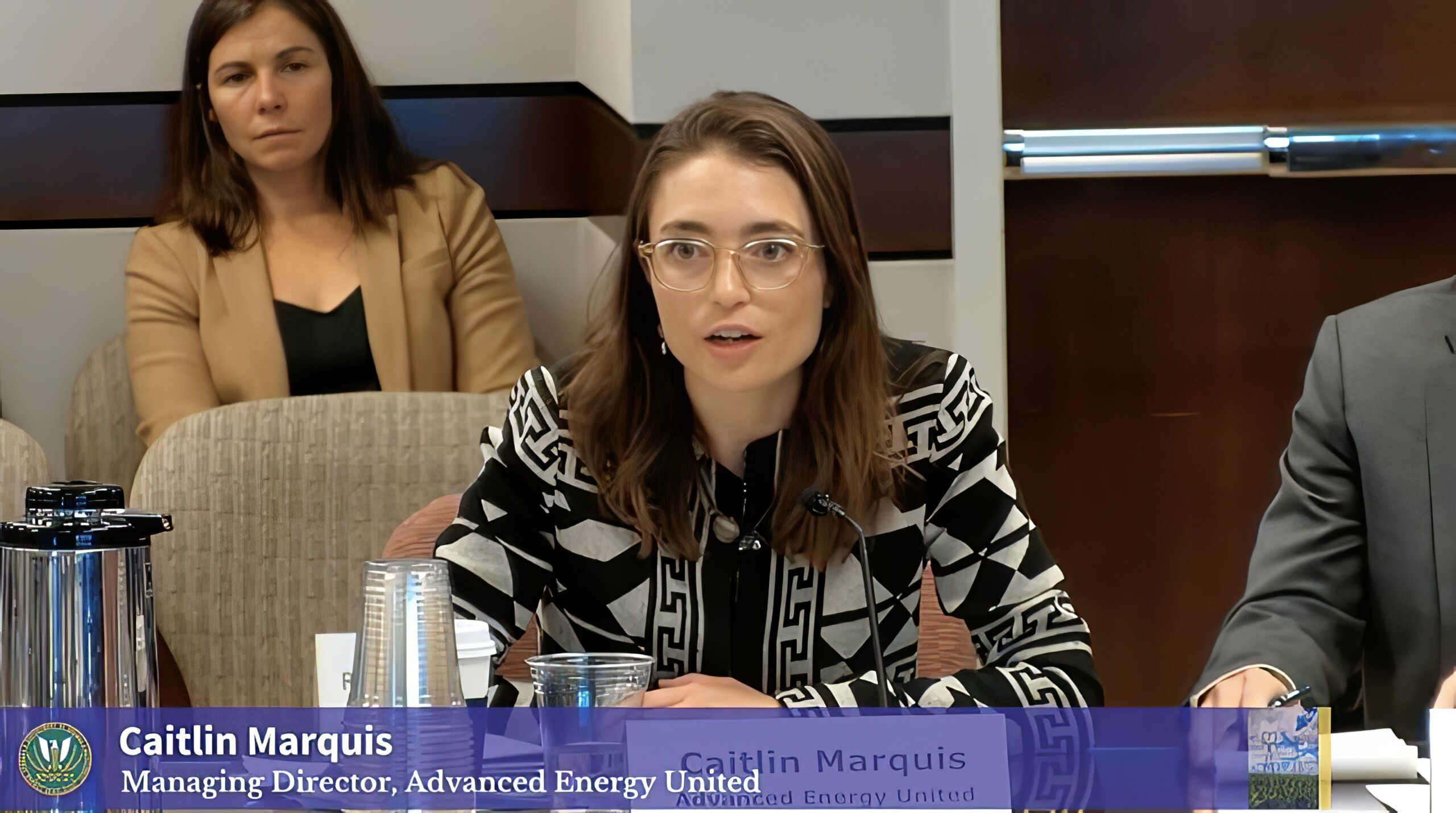
We then took those reforms directly to FERC. At FERC’s workshop addressing generator interconnection the following month, every single panelist joined Advanced Energy United’s Caitlin Marquis in citing the reforms mentioned in the report, showcasing our organization’s unique problem-solving and consensus-building aptitude. That week, hundreds of clean energy professionals also joined Advanced Energy United in our first-ever #InterconnectionWeek public awareness campaign, posting online about the problems with the status quo and the solutions we are championing.
We followed that up with a report focusing on PJM Interconnection and how it could have saved up to $7 billion in costs if the grid operator’s interconnection process had functioned more efficiently. We made a point of ensuring that the report was discussed widely at the 2025 Winter Summit for the National Association of Regulatory Utility Commissioners (NARUC).
The Result
Thanks to the landmark order from FERC (Order No. 2023), as well as sustained engagement from state leaders and the advanced energy industry along with its partners, grid operators are making notable progress in addressing interconnection queue backlogs and planning process improvements. Grid-connection bottlenecks are being addressed differently across the country, but grid operators are, with varied levels of success, clearing the backlog of projects waiting in line, while also preparing and implementing process changes for future review cycles of grid connections, many of which are just now underway. We’re seeing grid operators hiring more staff, improving project management tools, applying automation, increasing transparency, and improving coordination among transmission owners and interconnection customers. This is a massive undertaking by the grid operators to account for the new way electricity sources are being plugged into the transmission system.
For the first time, decision-makers are widely recognizing the problem–and the solution–to the interconnection challenges. Advanced Energy United continues to press grid operators to implement technology innovations and policy changes to make it easier for energy project developers to connect to the transmission grid. The waters remain choppy, but all the grid operators are finally rowing in the right direction.
In June 2026, United commissioned a “Generator Interconnection Report” developed by Grid Strategies and The Brattle Group, which evaluates how each grid operator is progressing at fixing these bottlenecks and outlines policy solutions to speed connection to the transmission grid. Advanced Energy United continues to stay focused on fixing these project bottlenecks so that advanced energy developers have the cost and timeline certainty they need, and all regions of the country have enough power to meet their growing energy demands.
At A Glance
Our Role
Advanced Energy United continues to bring together business leaders to build industry consensus, and our sustained engagement with grid operators and policymakers is leading to important process reforms, with more holistic changes still to come.
The Impact
Grid operators are reforming their interconnection queue processes so advanced energy companies can get their projects online quicker.
Grid operators are finally rowing in the right direction, but the waters remain choppy. We need to stay focused on fixing these project bottlenecks so that all regions of the country have enough power to meet growing energy needs.
Caitlin Marquis, Managing Director, Advanced Energy United