The Problem
New Yorkers want lower cost ways to heat their homes, and the state of New York wants to transition to carbon-free energy. But some long-standing rules were working against the switch to low-cost clean heat, one of which was increasing monthly energy bills to subsidize new pipeline infrastructure.
The most notable example of this is New York’s natural gas “line extension allowance,” which allows gas utilities to use ratepayer money to subsidize 100 feet of a new customer’s gas line. Known infamously as the “100-foot rule,” this policy was having the effect of making the dirtier, policy-misaligned option (gas appliances) artificially cheap. In that way, it was incentivizing customers to stick with gas instead of switching to cleaner building electrification options. The subsidization of new pipes threatened to make customers more dependent on an increasingly antiquated and expensive energy infrastructure system, and locking a shrinking number of gas utility customers into higher costs – to the tune of about $200 million per year.
The policy also conflicted with the state’s energy goals.
The Solution
New York’s “All-Electric Buildings Act,” passed in 2023, was a huge accomplishment, but it only applied to new construction. Millions of existing New York homes that use oil, wood, propane, or electric resistance heating might still be converted to gas using the 100-foot rule.
Washington, Colorado, Massachusetts, Maryland, and California have all initiated or completed their elimination of this subsidy (see more here). But because New York’s 100-foot rule is embedded within statute, the legislature needed to remove it.
Advanced Energy United, along with our allies, worked over the past three years to educate New York lawmakers, as well as Governor Kathy Hochul, about how eliminating the 100-foot rule would help unlock wider adoption of clean building electrification. Our partner social advocacy organization, Counterspark, also activated New Yorkers to speak out about their support for ending gas line subsidies as part of the NY HEAT Act.
Framed as an affordability issue, United communicated to decision-makers in the state how this antiquated rule was essentially a hidden cost on ratepayers that New Yorkers could no longer afford.
The Result
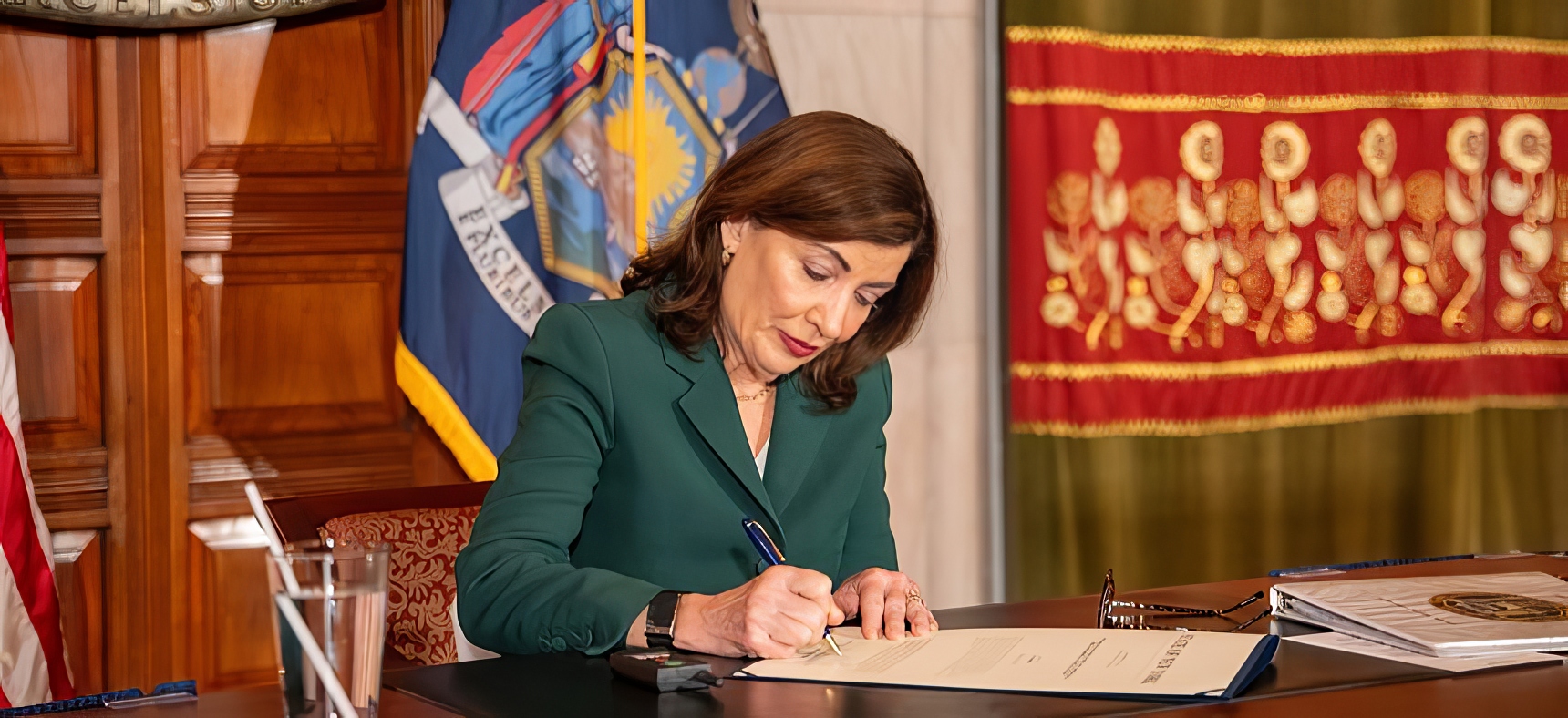
At the end of 2025, Governor Hochul signed into law new legislation that removed the 100-foot rule, eliminating the long-standing requirement that was forcing existing utility customers to pay $200 million a year to subsidize pipelines that did not serve them.
“The administration’s action today removes a hidden cost from utility bills and brings greater transparency to energy planning,” said Kristina Persaud, New York Policy Lead at Advanced Energy United, when the bill was signed. The law avoids roughly $1 billion in added costs to New York ratepayers over five years by ending automatic subsidies for new gas hookups.
At A Glance
Our Role
Advanced Energy United educated decision-makers about how an antiquated New York law was costing residents and businesses and slowing the switch to more efficient and cost-effective building electrification solutions.
The Impact
After years of education, advocacy, and voter activation in New York by United and our allies, Governor Hochul signed legislation into law in 2025, eliminating the so-called ‘100-foot rule.’
By ending this costly subsidy, this law will help protect New Yorkers and clear the way for more efficient heating alternatives.
Kristina Persaud, Senior Principal, Advanced Energy United