Michigan Utilities Must Consider Virtual Power Plants (VPPs) Going Forward, Warns MPSC
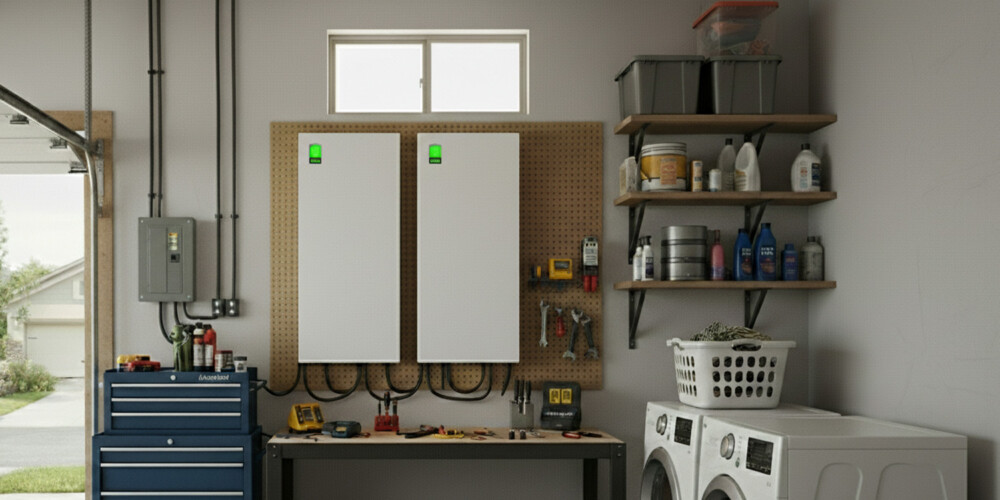
The Commission noted testimony from Advanced Energy United, Michigan EIBC, and the Institute for Energy Innovation in forewarning utilities they must consider virtual power plants
LANSING, MI – Michigan utilities were forewarned they must consider virtual power plants (VPPs) before seeking to propose capital investments that ultimately raise customer rates, according to a new order from the Michigan Public Service Commission (MPSC).
In the March 27 order, the MPSC told utilities that, going forward, they must consider whether VPPs can be leveraged to prevent the need for raising consumer rates and to bolster grid reliability. The MPSC pointed specifically to testimony from Advanced Energy United, the Michigan Energy Innovation Business Council (Michigan EIBC), and the Institute for Energy Innovation (IEI), known collectively as MEIU, in its order.
VPP programs allow residents and businesses to opt in to using the distributed energy resources already in their homes and businesses to send power to the grid or reduce their power demand when the grid is strained. Participating devices can include solar paired with battery storage, smart thermostats, smart appliances, and electric vehicles, that when coordinated together can replace the need for a large power plant. Homeowners would be paid for taking part, and even people who don’t own these tools benefit from improved reliability and cost savings.
The MPSC writes on page 493 of the order that “VPPs have the ability to be a fast-to implement, low-cost, reliable solution to both needed distribution investments as well as generation and resource adequacy,” referencing the benefits outlined by MEIU. It continued: “Therefore, the Commission issues ‘a prospective warning to the Company that, in light of the “extensive support for VPPs” in the record and the fact that “VPPs can provide a multitude of grid benefits, increase system reliability, and avoid or defer costly capital investments,” future proposed investments that fail to account for VPPs may be disallowed.’”
“The Michigan Public Service Commission is drawing a line in the sand,” said John Albers, Midwest Regulatory Director for Advanced Energy United. “Decision-makers across the country should take note that electricity providers who ignore virtual power plants are not pursuing every opportunity to lower costs for consumers and make the grid more reliable. Virtual power plants are a powerful tool for generating and saving energy without having to build new costly gas plants.”
“Virtual power plants can be used to take advantage of resources we already have,” said Dr. Laura Sherman, President of Michigan EIBC and IEI. “Instead of always needing to build new, costly resources, VPPs help families save by enabling Michiganders to provide power to their neighbors when it’s most needed. With increasing demand for electricity, it just makes sense to use these resources to lower costs for everyone.”
This order stems from a March 2025 request from Consumers Energy to raise customers’ electric rates. While that request was ultimately approved in part, the Commission took a proactive step toward the future, saying utilities in the state must now consider VPPs before requesting future rate hikes. MEIU intervened in the case, asking the MPSC to direct Consumers to work with stakeholders to develop an effective VPP program, in addition to requiring the company to focus on advanced energy technologies, enhancing the supply chain for Consumers’ interconnection process, and modifying the Transportation Electrification Plan and direct current fast charger rates for electric vehicles.
Michigan legislators are also taking steps to utilize VPPs and make the state’s grid more affordable and reliable. In March, the Senate Energy and Environment Committee passed Senate Bills 731 and 732, which would require electric utility companies to establish technology-inclusive VPP programs. The bills are sponsored by Senators Sue Shink and Jeff Irwin and are now before the full Senate for consideration.
Over a dozen states have established or are considering establishing VPP-style programs. VPPs are an essential part of the solution for making Michigan’s grid more reliable and affordable.