Reflections From California Powers Up: Energy & Policy Solutions Summit
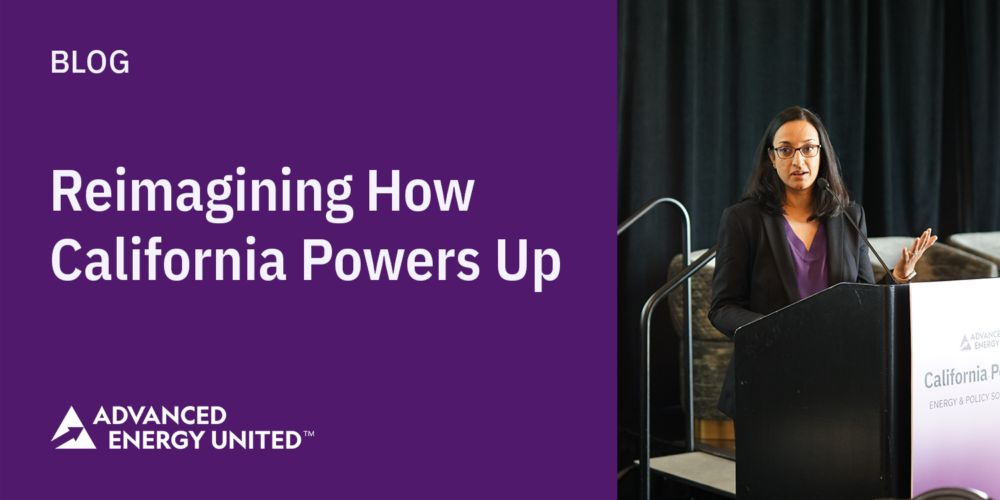
California has long been a leader in innovating how we power our homes and businesses, and we have a robust policy legacy to show for it. But now we risk increasingly unaffordable and unreliable power if we continue to do things the way they have always been done. Rising electricity costs, growing demand, extreme weather events, and the need to maintain reliability requires a new approach, one that embraces the advanced energy solutions available right now.
That was the driver behind our inaugural California Powers Up: Energy & Policy Solutions Summit, where we brought together industry leaders, state decisionmakers, and other stakeholders this week to discuss tangible solutions to meet the Golden State’s growing energy needs. We’re incredibly grateful to our sponsors, including Wilson Sonsini, EnergyHub, ERock, Sunrun, CTC Global, Shaw, Yoder, Antwih, Schmelzer & Lange, and SPAN, who made the summit possible and helped us bring these important conversations to Sacramento.
I was honored to welcome a room full of attendees to the summit and to moderate conversations that got to the heart of the choices California faces as its energy needs continue to evolve. In our opening fireside chat, California Public Utilities Commission President John Reynolds and California Energy Commission Chair David Hochschild shared their perspective on the challenges and decisions that will shape the next four years of energy policy in the state and what it will take to keep the state in a leadership position.
Both President Reynolds and Chair Hochschild conveyed that California needs a long-term, customer-focused vision for its energy system that can keep pace with the state’s economic growth without putting even more pressure on ratepayers. This means creating greater certainty around energy policy; making better use of resources already available to us, from flexible demand to the millions of connected devices coming onto the grid; and staying focused on the critical work of implementation, utility planning, and getting resources connected faster.
California has already demonstrated what is possible through the rapid growth of solar and storage, and through programs that tap into existing resources when the grid needs them most. The opportunity now is to build on what works, strengthen public-private collaboration, and move practical solutions onto the grid faster and more affordably.

From left to right: California Energy Commission Chair David Hochschild, California Public Utilities Commission President John Reynolds, and United Senior Vice President of Advocacy Amisha Rai on the “Powering California’s Future: A Fireside Chat with State Energy Leaders” panel.
Later in the summit, I had the opportunity to sit down with the Republican candidate for Governor, Steve Hilton. During this brief, yet lively fireside conversation, we dove into his proposed energy plan, which includes eliminating California’s long-standing renewable portfolio standard. Mr. Hilton did not go into specifics about how he would go about reversing these regulations, but he voiced his perspective that California’s clean energy and climate regulations are making it too expensive for manufacturing and other economic growth in the state. I shared that the advanced energy industry in California represents close to half a million jobs across the state and that recent polling data suggests the electorate views clean energy as an affordability solution, to which Hilton responded that he wants to see more clean energy in the state but strongly disagrees with the approach of previous Administrations. In addition to eliminating existing mandates, his plan includes maximizing the use of existing natural gas power plants, nuclear, and rooftop solar. As we approach November, the United team is hoping to hear more specifics from both candidates on how they would implement their plans and proposed reforms.
California Gubernatorial Candidate Steve Hilton (left) and United’s Amisha Rai (right) on the “California’s Energy Future: A Fireside Conversation with Gubernatorial Candidate Steve Hilton” panel.
Prioritizing Energy Affordability & Reliability
With electricity costs rising and extreme weather putting additional pressure on the grid, affordability and reliability were at the center of discussions throughout the day. In our Solutions to Rising Electricity Costs in California panel, panelists examined what is driving high energy bills in the state, as well as the policy and market solutions that can help put downward pressure on costs. One of the takeaways from this discussion was the importance of improving access to customer energy data. When consumers have better information on how and when they use energy, even small changes, such as adjusting a thermostat or upgrading an appliance, this can add up to meaningful savings on their electricity bills. California has invested in these technologies; now we need to make sure consumers can actually use that information to their advantage. Panelists also highlighted that making better use of our existing grid can help drive down costs for everyone, which is especially important for consumers who don’t have the ability to lower their usage further.
From left to right: EnergyHub’s Seth Frader-Thompson, City of Los Angeles Office of Public Accountability/Ratepayer Advocate’s Timothy O’Connor, SPAN’s Arch Rao, The Utility Reform Network’s Adria Tinnin, and United Managing Director Leah Rubin Shen on the “Solutions to Rising Electricity Costs in California” panel.
In one of our breakout sessions, When the Lights Go Out: Solutions for Extreme Weather & Resilience, the focus turned to resilience, exploring how California can better prepare for—and recover from—extreme weather, outages, and other threats to reliability. The conversation explored the role advanced energy technologies can play in keeping homes and businesses powered when the grid is under stress, as well as the policies and investments needed to build a more flexible, responsive, and resilient energy system. Panelists also discussed the importance of planning ahead for increasingly challenging conditions and making better use of distributed and flexible resources to strengthen reliability before emergencies occur.
From left to right: Renew Home’s Erik Lyon, CTC Global’s Paige Rodrigues, Sunrun’s Lauren Nevitt, ERock’s Allan Schurr, and NRG Energy’s Rebecca Lee on the “When the Lights Go Out: Solutions for Extreme Weather & Resilience” breakout session.
Together, these discussions reinforced that affordability and reliability aren’t competing priorities and must be addressed in tandem as California plans for its growing energy needs.
Deploying Solutions for the Grid of the Future
California doesn’t need to wait for breakthrough technologies to address its growing energy challenges. In our breakout session, Grid of the Future: Build It, Make It Flexible, Make It Affordable, panelists explored how California can expand and modernize its grid while making better use of the infrastructure already in place, from building transmission and accelerating interconnection to deploying flexible resources that can help manage energy demand.
Through our collective Energy Solutions Showcase, representatives from some of our member companies, including Renew Home, Sunrun, CTC Global, NRG Energy, EDF Renewables, GoodLeap, and XGS Energy, showcased how their technologies are already helping communities prepare for extreme weather events, improving grid flexibility, and meeting rising electricity demand.
California has the technology at its fingertips, but policy and regulatory frameworks need to enable deployment at greater speed and scale.
From left to right: GoodLeap’s Christopher Worley, XGS Energy’s Caity Smith, EDF Renewables’ Rachel McMahon, and United Member Engagement Director Verna Mandez on the “Grid of the Future: Build It, Make It Flexible, Make It Affordable” breakout session.
Shaping California’s Policy & the Road Ahead
With the legislative session nearing its end and a gubernatorial election on the horizon, California’s energy story is entering a new chapter that will put a sharper focus on how state energy policies are implemented, what they cost, and how they affect Californians.
As part of our Navigating the Road Ahead: What’s in Store for the Next Governor panel, which explored what both California consumers and the clean energy industry need from the next administration, we announced new poll findings that found a supermajority of likely California voters view clean energy as an affordable approach for meeting the state’s energy needs. As the panelists underscored, California leaders need to advance practical solutions that take advantage of every available technology and not let bureaucracy get in the way of achieving affordability.
From left to right: Senator Eloise Gómez Reyes, Assemblymember John Harabedian, Senator Jerry McNerney, Bold Decision’s Adam Rosenblatt, and Wilson Sonsini Goodrich & Rosati’s Todd Glass on the “Navigating the Road Ahead: What’s in Store for the Next Governor” panel.
Other panels brought additional perspectives to what comes next for California. The 2025-26 California Policy Landscape: What Has Happened and Where We Are Headed panel took stock of recent legislative and regulatory developments and what they mean for the state’s energy priorities, while our Writing the Energy Story: How the Press is Covering California’s Energy Landscape panel explored how the media is covering rising costs, reliability, clean energy, and the broader debate over California’s energy future.
From left to right: Stanford Woods Institute for the Environment’s Michael Wara, Environmental Defense Fund’s Katelyn Roedner Sutter, and United California Director Brandon Garcia on “The 2025-26 California Policy Landscape: What Has Happened and Where We Are Headed” panel.
From left to right: CalChamber’s John Myers, Canary Media’s Jeff St. John, POLITICO’s Noah Baustin, and United Senior Communications Principal Caroline Schappert on the “Writing the Energy Story: How the Press is Covering California’s Energy Landscape” panel.
Powering What Comes Next for California
In her closing keynote, Assemblymember Cottie Petrie-Norris, Chair of the Utilities and Energy Committee, brought many of the day’s conversations together, outlining four policy areas where California needs to make progress, including:
- bringing down electricity and gasoline costs
- removing barriers that slow the deployment of clean energy
- getting data center policy right as demand grows; and
- developing a thoughtful strategy for transitioning away from petroleum fuels.
Assemblywoman Cottie Petrie-Norris providing the summit’s closing remarks.
These are significant challenges, but they also point to where readily deployable advanced energy technologies can make a meaningful difference. Through our ongoing work with California’s leaders, Advanced Energy United is helping shape and implement practical policy solutions that can accelerate the deployment of these proven technologies, strengthen the grid, meet growing demand, and lower costs for Californians.
Download our California state policy roadmap to explore Advanced Energy United’s recommendations for California’s next governor and the policies that can deliver more affordable, reliable energy.