Industry Leaders Discuss Energy Solutions with Candidate for Governor in Wisconsin
Decisionmakers right now are asking themselves, “How can my state build a more affordable and reliable energy grid?” As electricity prices keep rising, outpacing the inflation rate, Advanced Energy United continues to meet with state leaders, including candidates for Governor in states across the country, to talk about the practical advanced energy solutions that can keep prices down, make our grid more flexible and responsive, and increase speed to power. Our solution set is summed up in our Advocacy Playbook: Build it, Make it Flexible, and Make it Affordable. Each state can meet its energy challenges by making it easier to build large-scale resources, leveraging and deploying grid-edge technologies, and directing state investments towards economically sustainable advanced energy solutions.
As part of our ongoing engagement with decision-makers, United and several of our member companies, Apex Clean Energy, EnergyHub, Generac, and Sunrun, sat down on April 13 with Wisconsin gubernatorial candidate and Former Lieutenant Governor Mandela Barnes and his team to discuss strategies for achieving these goals, using our 2026 Wisconsin Policy Roadmap as a guide.
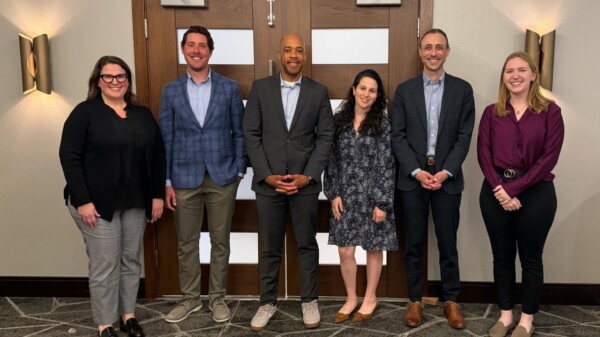
From left to right: Amy Heart (Sunrun), Chris Kunkle (Apex Clean Energy), former Wisconsin Lieutenant Governor Mandela Barnes, Jena Ginsburg (Generac), Seth Frader-Thompson (EnergyHub), and United’s Wisconsin Policy Principal Emma Heins.
Virtual Power Plants Offer Immediate, Scalable Capacity
Wisconsin is no longer in a period of “flat” energy demand; with load growth accelerating, the state needs new capacity, quickly. While large-scale generation will remain essential, those projects can sometimes take a long time to come online. Like so many states, Wisconsin also needs more avenues for meeting immediate needs, and virtual power plants (VPPs) offer that fast, flexible opportunity. By aggregating distributed energy resources (DERs) and dispatching them during peak periods, VPPs can inject capacity onto the grid when it’s needed most—reducing reliance on costly peaker plants and lowering blackout risk. United’s member companies are already successfully deploying VPPs across the country and are well-positioned to scale these solutions in Wisconsin. State leadership will be critical to prioritizing policies and market structures that enable streamlined VPP deployment.
Transparent, Long-Term Planning Drives Better Outcomes
Unlike many vertically integrated states, Wisconsin lacks a formal, public integrated resource planning (IRP) process. The absence of transparent, long-term resource planning limits visibility into future load growth and how utilities intend to meet it. The result is a fragmented approach to grid development—one that prioritizes near-term service requests over system-wide optimization. Without a clear planning framework, decisions around generation and demand-side resources are made by each utility independently, without any coordination or consistent incentives to pursue the lowest-cost, most effective solutions for ratepayers.
Advanced energy also employs 88,000 Wisconsinites, more than the state’s hallmark agriculture industry, and a long-term resource plan would provide a roadmap of what energy infrastructure the state will build over the next 20 years, giving workers, unions, and training programs clear visibility into the types of jobs and skills that will be in demand.
United, former Lt. Gov. Barnes, and his staff discussed how a more transparent planning process would improve resource utilization, create clearer market signals, and enable more cost-effective investment decisions.
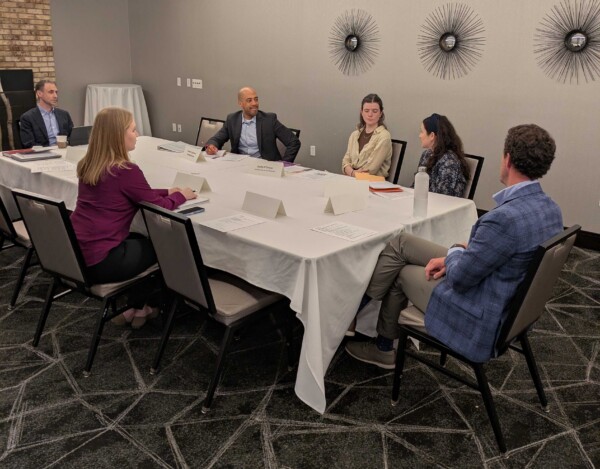
From left to right: EnergyHub’s Seth Frader-Thompson, United’s Wisconsin Principal Emma Heins, Former Lieutenant Governor Mandela Barnes, Darby O’Connor, Generac’s Jena Ginsburg, and Apex Clean Energy’s Chris Kunkle.
Preserving Stable Permitting
Despite planning challenges, Wisconsin remains an attractive market for clean energy investment. The state’s siting and permitting framework for renewable energy projects is relatively clear and time-bound, providing the predictability developers need. However, that advantage is not guaranteed. Federal policy uncertainty and ongoing supply chain instability have created headwinds for project development. At a time when deployment should be accelerating to keep up with growing energy demand, these risks have slowed progress. United’s members emphasized that maintaining Wisconsin’s stable permitting environment will be essential going forward. Strong gubernatorial leadership can help preserve this stability and ensure the state remains competitive for clean energy investment.
Read more about policies that would move Wisconsin towards a reliable, flexible, and affordable energy grid in the Wisconsin Policy Roadmap.