From Data Centers to Grid Flexibility: Key Takeaways from DERVOS
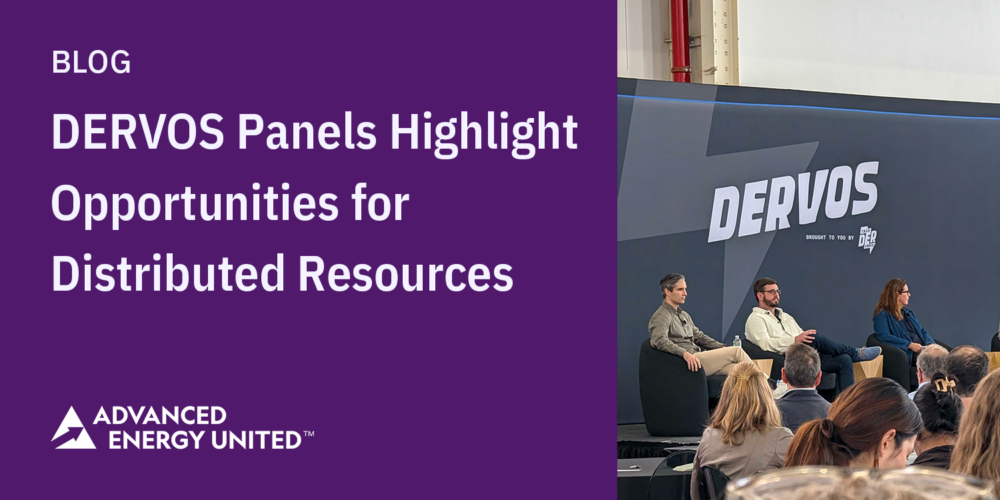
Growing electricity demand, new market opportunities, and changes in how distributed energy resources (DERs) are valued are reshaping the advanced energy industry. For companies developing, installing, and supplying these technologies, there has been an increasing focus on how to deploy more resources and make them more valuable to the grid.
These issues took center stage at DERVOS, an annual gathering organized by the DER Task Force that brings together hundreds of leaders in the distributed energy space. The conference is known for eliciting hot takes from its speakers and panelists.
At this year’s event in an airy, sunlit warehouse in Brooklyn in early November, DERVOS’ panels featured DER endorsements from a FERC Commissioner, post-election reality checks for the DER industry, and insight into how increasingly affordable technologies can help meet growing electricity demand while supporting grid reliability.
Federal Support for Distributed Energy’s Growing Role on the Grid
Sometimes an impactful panel is not just about what is being said, but who is saying it. The DER industry has been saying that DERs are important to reliability and affordability for years. At DERVOS, the audience heard from decision-makers who are in a position to influence DERs’ future on the grid, such as FERC Commissioner David Rosner.
Rosner shared his opinion that the United States needs electrons, and DERs are some of the fastest technologies to deploy, so maximizing the use of DERs is essential. He also noted that, in his view, allocating the cost of new infrastructure to data centers will be a key incentive for data centers to do bilateral procurements with new partners, including DER providers.
Rosner emphasized that there are now examples around the country where DERs are meaningfully reducing resource adequacy risk, and that those use cases need to be replicated.
For the advanced energy industry at large, greater recognition of the grid value of DERs could have meaningful commercial implications. Batteries and other distributed technologies can already serve customers, allowing them to manage their bills and improve resilience. When connected and coordinated through virtual power plants (VPPs), they can help the entire grid by reducing peak demand, supporting reliability, and minimizing costs for all ratepayers.
However, unlocking that value depends on market rules and access to the information needed to operate these resources effectively.
During the discussion, Rosner was asked about the recent Mission data and Voltus lawsuit seeking to unlock meter data in PJM to enable DERs to participate fully in the ISO. Such access can be critical to enabling DERs to participate in wholesale markets and receive appropriate compensation for the services they provide.
“As a country, we should aspire to free the meter data,” said Rosner. “And if there’s another way to do it without the meter, I’m all for that.”
Reflecting on the recent election, Rosner also observed that Americans want cleaner, more affordable power that’s delivered faster, and he sees DERs as a key way to meet voters’ expectations.
A Post-Election Call to Action
DERVOS took place on November 5, immediately after the midterm elections, making the implications of the results a central topic of conversation.
Jigar Shah, of clean energy advisory firm Multiplier, had blunt words about the implications of the midterms: “None of the people who just got elected, Democrat or Republican, know who any of you are,” emphasizing the need for the advanced energy industry to engage with newly elected policymakers.
Heather O’Neill, Advanced Energy United President and CEO, further reinforced the importance of this type of engagement, highlighting recent state-level progress in DER policies. She underlined major achievements by Governors within the last year, including New Jersey Governor Mikie Sherrill’s executive order calling for VPPs to help drive affordability, which has spurred action by the New Jersey Board of Public Utilities.
However, she noted that these policy successes require sustained investment by the DER industry. With new state decision-makers taking office, DER advocates have an important opportunity to demonstrate how distributed solar, battery storage, and other flexible technologies can help address affordability agendas.
O’Neill stressed that DER advocates lose decision-makers if they get into too much complexity: “All they care about is results.”
State policies expanding VPPs, clear rules for procurement of distributed resources, and expanded market participation for DERs can all help create new demand and revenue opportunities. Ensuring policymakers understand these benefits will be important to accelerating deployment and opening new markets.
Data Centers Are Creating New Opportunities for Distributed Energy
As data center electricity demand grows, major technology companies are exploring how DERs can help them secure reliable power and address grid constraints.
“Google is not interested in optimizing energy costs right now,” said Varun Mehra, Technical Lead for Data Center Flexibility at Google. “The value of lost load is high.”
At DERVOS, Mehra spoke with other experts on the intersection of large loads and DERs about why compute needs DERs and grid flexibility. Google is already exploring these solutions, as evidenced by its 100 MW VPP in PJM with Voltus and advocacy in NV Energy’s Integrated Resource Planning process, among other venues. Advanced Energy United and Google are advocating for the creation of a Large Customer Offsite Demand Side Management (DSM) pilot as part of NV Energy’s IRP, wherein technology companies would be allowed to fund home upgrades that could reduce ratepayer costs and limit the impact of Google facilities on the grid.
“If we can reduce non-firmness with local resources that solve a zonal or transmission constraint, that is a huge opportunity for DERs,” said Mehra.
Angela Kent with CoreWeave, also on the panel, similarly noted that flexibility doesn’t have to come exclusively from resources located at a data center. Solar, storage, and other distributed technologies located nearby can also help address grid constraints and support reliability. When paired with appropriate rate structures, these resources can help data centers maintain uninterrupted operations while providing flexibility to the broader grid.
“Flexibility isn’t just demand response; flexibility to support data center interconnection doesn’t just look at the site,” said Kent. “It also looks at resources that are in the same zone that can serve resource adequacy and T&D needs.”
As data centers seek faster access to reliable power, distributed resources can play a growing role in meeting their needs, particularly where local grid constraints make traditional infrastructure upgrades costly or time-consuming. Realizing that potential will depend on how these resources are integrated into grid planning and interconnection processes.
What’s Next for Distributed Energy?
The discussions at this year’s DERVOS made clear that as electricity demand grows, so does the opportunity for distributed resources to play a larger role in supporting the grid. The challenge going into 2027 is ensuring these technologies can be deployed to the fullest possible extent, coordinated, and compensated in ways that deliver value to both customers and the broader electricity system.