Failure to Plan Costs Wisconsin Consumers as Energy Demand Rises

In an era of rising utility bills, extreme weather events, and load growth, ratepayers find themselves asking, “What’s the plan here?”
As Wisconsin’s energy system enters a period of significant change, utilities are considering billions of dollars in new generation and transmission to keep up with rising electricity needs and to replace aging power plants. These infrastructure investment decisions will shape customer bills and grid reliability for decades. Yet Wisconsin remains one of the few states where utilities are not required to develop an Integrated Resource Plan (IRP). IRPs are comprehensive, long-term plans for how to meet demand and evaluate investments. Especially in this new era of rapid innovation and change, Wisconsin’s lack of an IRP presents a potential hazard to affordability.
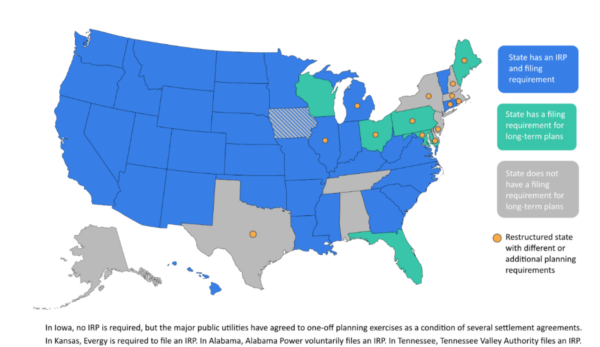
Wisconsin’s current energy planning system, the Strategic Energy Assessment (SEA), no longer meets the moment. The SEA is a snapshot in time, not a forum where utilities must model and compare alternative resource portfolios to identify an affordable and reliable path. Without an IRP process, Wisconsinites are left with a piecemeal grid that focuses on meeting short-term requests for service rather than an efficient, modern grid that serves the whole state.
Advanced Energy United partnered with Synapse Energy Economics to explore what ratepayers could have saved if utilities had a comprehensive planning process that required them to invest in the most affordable portfolio of resources.
Here is what we found:
- From 2021 to 2024, WE Energies customers in Southeast Wisconsin could have saved $164 million per plant per year if WEC had invested in a lower-cost portfolio of resources.
- Alliant Energy, a smaller utility that serves parts of south-central Wisconsin, could have saved its customers $10 million per plant per year if it had fully considered and invested in a lower-cost portfolio.
- In years with fuel price spikes driven by market disruptions and geopolitical conflicts, advanced energy technologies provide consistent and affordable electricity.
With energy demand in Wisconsin expected to rise 40% by 2032, it is critical that the Public Service Commission use every tool at its disposal to ensure that efficient, affordable, and reliable decisions are being made for the grid. Maintaining higher-cost existing generation has real consequences for customer bills when lower-cost alternatives are available. Wisconsin can no longer afford to make billion-dollar energy decisions one project at a time. Policymakers should establish an IRP process that puts affordability, reliability, and long-term value for ratepayers at the center of utility decision-making.
Access the full report findings here or visit wienergyfuture.org for more information.